

Choosing between skip hire and grab hire in Liverpool isn't complicated. But get it wrong and you'll waste money, time, and create headaches you don't need.
We've seen the same mistakes play out dozens of times across Liverpool, St Helens, Southport, and the surrounding areas. Here's what to avoid.
Mistake 1: Picking Skip Hire When You Need Grab Hire (or Vice Versa)
Skip hire works for mixed waste that builds up gradually. DIY projects, house clearances, shop refits. You fill it over days or weeks.
Grab hire suits large volumes of single materials removed in one go. Soil from excavations, rubble from demolitions, green waste from site clearances.
When to use skip hire Liverpool:
- Mixed waste types (wood, plaster, metal, packaging)
- Project spans multiple days or weeks
- Limited site access for large vehicles
- Waste accumulates gradually
When to use grab hire Liverpool:
- Single material type (soil, concrete, hardcore, green waste)
- Large volume available immediately
- Good vehicle access to site
- Quick turnaround needed
Grab lorries hold 16 tonnes. They arrive, load, and leave within an hour. You don't need ground space for container placement. Skip hire requires space for the skip plus room for the delivery lorry to position it.

Mistake 2: Not Checking Access Before You Book
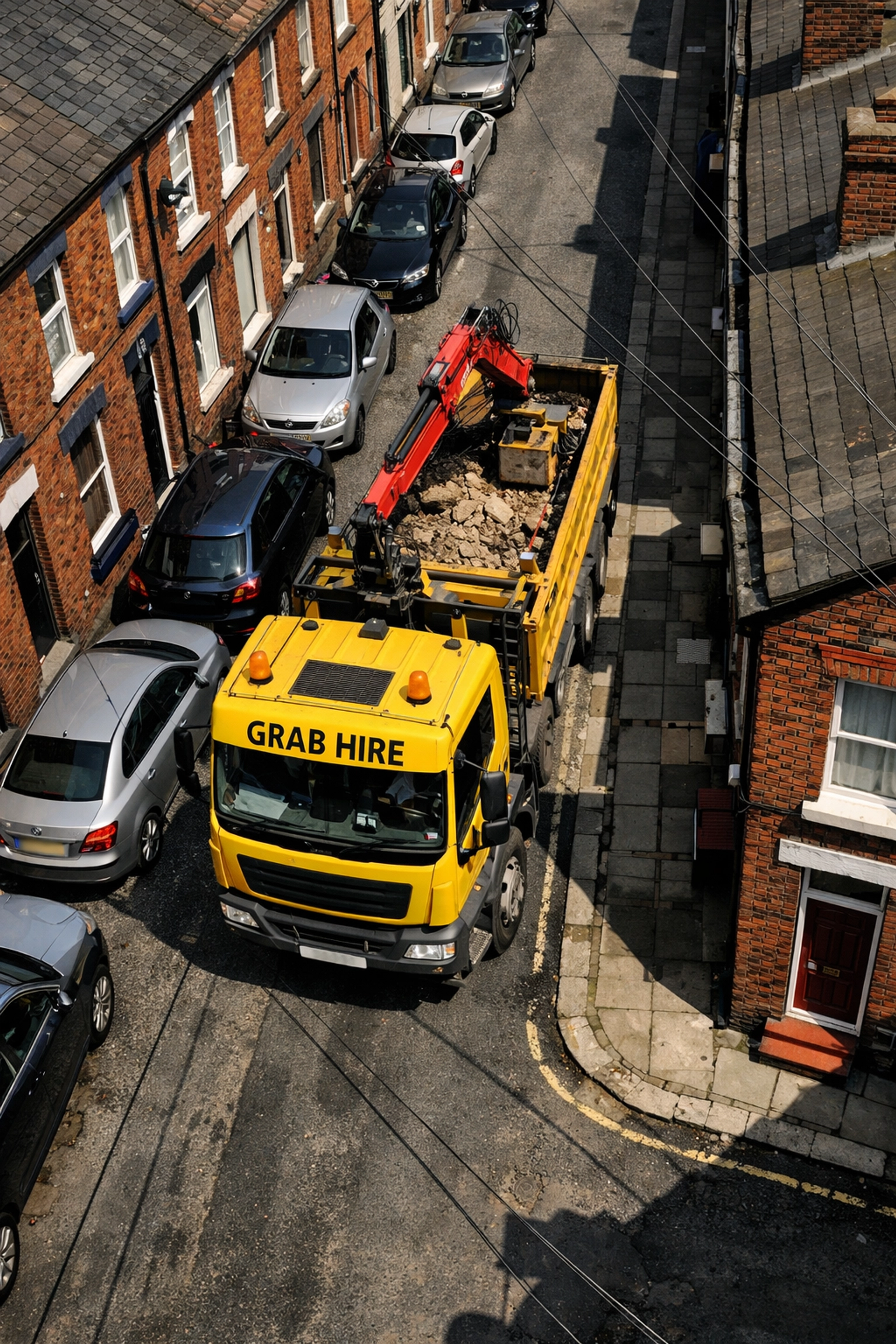
Grab lorries need adequate space to position the vehicle and extend the hydraulic arm. The arm reaches up to 8 metres but needs clear access.
Common access issues in Liverpool:
- Narrow terraced streets in Anfield, Everton, Wavertree
- Parked cars blocking positioning space
- Low-hanging cables or tree branches
- Soft ground that won't support a 32-tonne vehicle
Skip delivery requires different considerations. The lorry needs enough width to manoeuvre and drop the skip. Tight corners, narrow gateways, and restricted turning circles cause problems.
Check your site access before booking. Measure gateway widths. Note overhead restrictions. Consider ground conditions after rain.
We can't deliver if the vehicle can't safely access your site. You'll still pay a callout fee.
Mistake 3: Ignoring Liverpool Council Permit Requirements
Skip on private property? No permit needed.
Skip on the road or pavement? You need a permit from Liverpool City Council. This applies to most terraced properties without driveways.
Permit costs range from £25-£50 depending on duration. Processing takes 3-5 working days. You can't place the skip until the permit's approved.
Factor permit time into your project schedule. Don't book skip delivery for Monday if you're applying for the permit on Friday.
Grab hire doesn't require permits. The vehicle doesn't stay on site.
Placing a skip without a permit risks fines up to £1,000. Liverpool Council actively enforces this.
Mistake 4: Getting the Size Wrong
Order too small and you'll need a second skip. Order too large and you're paying for empty space.
Standard skip sizes:
- 4-yard mini skip: small bathroom refit, garden clearance
- 6-yard skip: kitchen removal, moderate building work
- 8-yard skip: full room clearance, larger renovations
- 12-yard skip: extensive building projects, commercial work
An 8-yard skip holds roughly 80-90 bin bags. Most domestic projects need 6-8 yards.
Grab hire capacity is measured differently. One grab load handles 16 tonnes. That's equivalent to roughly two 8-yard skips for heavy materials like soil or hardcore.
For lightweight materials, volume matters more than weight. A grab lorry's physical capacity fills before hitting the weight limit.
Don't guess. Describe your project honestly when you call. We'll recommend the right option based on hundreds of similar jobs across Liverpool.
Mistake 5: Poor Project Timing
Skip hire gives you flexibility. Keep it for 1-2 weeks (sometimes longer). Fill it as you work.
This suits:
- Weekend DIY projects
- Phased renovations
- Jobs where waste accumulates gradually
Grab hire works for immediate removal. It's not suited to projects where waste builds up over time. You need the full load ready when the lorry arrives.
Book grab hire too early and you're not ready. Too late and you're storing waste on site longer than necessary.
Match the service to your project timeline. Clearance companies and demolition contractors typically use grab hire. Homeowners doing gradual renovations need skip hire.

Mistake 6: Not Understanding the Cost Structure
Skip hire charges by container size and hire period. Prices in Liverpool typically range:
- Mini skip (4-yard): £100-£150
- 6-yard skip: £140-£200
- 8-yard skip: £180-£260
- 12-yard skip: £260-£400
Prices include delivery, collection, and disposal within the weight limit. Keep it longer than the agreed period and you'll pay extra daily charges.
Grab hire pricing depends on material type and volume. Inert waste (soil, hardcore, concrete) costs less to dispose of than mixed waste. One 16-tonne load typically costs £200-£350 depending on material.
Grab hire becomes more cost-effective for large volumes of single materials. Skip hire suits mixed waste or smaller quantities.
Both services exclude hazardous waste. Asbestos, chemicals, batteries, tyres, and electrical items need specialist disposal.
Ask for a clear quote upfront. Include your postcode (disposal costs vary by area), waste type, and estimated volume.
Mistake 7: Assuming All Waste is Accepted
Neither service accepts hazardous materials. This includes:
- Asbestos (any form)
- Paint tins and chemicals
- Batteries and electrical equipment
- Medical waste
- Fluorescent tubes
- Gas bottles
- Tyres
- Fridge and freezers
Contaminating a skip or grab load with prohibited items causes disposal delays and extra charges. You'll pay for specialist waste removal separately.
Plasterboard requires segregation in many cases. It can't mix with other waste types due to disposal regulations.
Before loading, separate:
- Wood (treated vs untreated)
- Metal and scrap
- Soil and rubble
- General mixed waste
Clean, separated waste reduces disposal costs. Mixed contaminated waste increases them.

Making the Right Choice for Your Liverpool Project
Most Liverpool homeowners need skip hire for renovations, clearances, and DIY projects. The flexibility of keeping a skip on site for a week or two suits how most domestic work actually happens.
Grab hire works for construction professionals, landscapers, and anyone dealing with large volumes of excavated material or demolition waste.
Consider your specific situation:
- Waste type and volume
- Project duration
- Site access constraints
- Budget and cost structure
- Permit requirements and timings
Neither service is universally better. They solve different problems.
We've handled both skip hire and grab hire across Liverpool for over 20 years. We know which solution fits which project.
Get it right first time. Choose based on your actual needs, not assumptions or convenience. Check access before booking. Sort your permit requirements early. Understand what you can and cannot dispose of.
The right service, properly sized, with clear access and correct permits, saves you money and hassle. Everything else is just waste.
Need help deciding? Get in touch and we'll talk through your specific project. No generic advice. Just practical recommendations based on what actually works in Liverpool.