
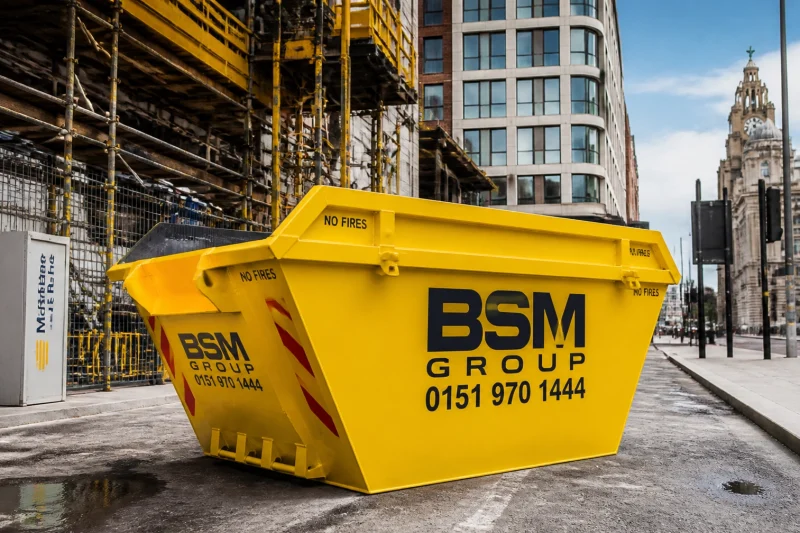
Skip hire costs depend on size, location, and waste type. Poor planning increases expenses. We provide skip hire services across Liverpool and the North West. We've identified seven common errors that increase project costs.
1. Selecting the Incorrect Skip Size
Choosing a skip that is too small leads to multiple bookings. Two 4-yard skips cost more than one 8-yard skip. Choosing a skip that is too large results in paying for unused capacity.
Skip Size Specifications:
- 2-Yard (Mini Skip): Holds approximately 20–30 bin bags. Suitable for small garden clearances.
- 4-Yard (Midi Skip): Holds approximately 40–50 bin bags. Suitable for kitchen or bathroom refits.
- 8-Yard (Builders Skip): Holds approximately 60–80 bin bags. This is the maximum size for heavy waste like soil and rubble.
- 12-Yard (Large Skip): Suitable for bulky light waste. Not for soil or brick.
- Roll-on Roll-off (RoRo): 20–40 yards. Designed for large commercial sites and high-volume waste.
We offer all sizes through our skip hire service.

2. Overlooking Liverpool City Council Permit Fees
Placement determines the price. Skips on private land require no permit. Skips on public highways require a Liverpool City Council permit.
Permit Facts:
- Cost: Approximately £44 per skip in 2026.
- Duration: Valid for 7 days.
- Processing Time: Requires 2 working days’ notice.
- Fines: Placing a skip on a public road without a permit results in a £200 fine plus the permit fee.
- City Centre Rules: Open skips must be removed the same day. Overnight stays require enclosed, lockable skips.
We handle permit applications for our customers. You can find more information on our about us page.
3. Disposing of Prohibited Items
Mixing hazardous waste with general waste leads to surcharges. Waste transfer stations charge higher rates for restricted items. Drivers will refuse collection if these items are visible.
Prohibited Waste List:
- Electricals (WEEE): Fridges, freezers, televisions, and microwaves.
- Hazardous Liquids: Paints, solvents, oils, and fuels.
- Gas Cylinders: Propane, butane, and fire extinguishers.
- Tyres: Car and commercial vehicle tyres.
- Asbestos: Requires specialist disposal.
- Plasterboard: Must be kept separate from general waste.

4. Exceeding the Level Load Line
Skips must be filled to the top rail only. This is a legal requirement for safe transport. Overfilled skips pose a risk to road users.
Consequences of Overfilling:
- Refused Collection: The driver will leave the skip on-site.
- Re-handling Fees: Charges for rearranging waste to make it safe.
- Waste Removal: You must remove the excess waste before the second collection attempt.
- Safety Hazards: Loose debris can fall during transit.
5. Poor Loading and Space Utilization
Inefficient loading creates air pockets. This reduces the amount of waste you can fit. Increased air pockets mean you pay to transport air.
Loading Protocols:
- Flat Items First: Place doors, boards, and cardboard at the bottom.
- Heavy Waste: Put bricks, soil, and rubble on top of flat items.
- Break Down Bulky Items: Dismantle furniture and cabinets.
- Fill Gaps: Use small waste to fill spaces between larger items.

6. Ignoring the 7-Day Permit Limit
Liverpool City Council permits last for 7 days. If the project exceeds this timeframe, a new permit is required.
Timeline Management:
- Coordinate Delivery: Ensure waste is ready for loading before the skip arrives.
- Book Collection Early: Contact us 24 hours before you need the skip removed.
- Multiple Permits: Each 7-day extension incurs a full permit fee.
7. Neglecting Site Access Requirements
Delivery failure results in "wasted journey" charges. We use large HGVs for delivery. Clear access is mandatory.
Access Requirements:
- Width: Minimum 10 feet wide.
- Obstructions: Remove parked cars and low-hanging branches.
- Surface: Ensure the ground can support the weight of the truck and a full skip.
- Manhole Covers: Avoid placing skips over utility covers.
Alternative Waste Solutions
For large volumes of soil or rubble, a grab wagon is often more cost-effective.
Grab Hire Specifications:
- Capacity: 32-tonne wagons.
- Volume: Equivalent to approximately three 8-yard skips.
- Reach: 7-metre crane arm for loading over fences or walls.
- Benefit: No permit required as the wagon operates from the road and leaves immediately.

Summary of Costs and Specifications
| Service | Best For | Typical Volume | Permit Needed? |
|---|---|---|---|
| 2-Yard Skip | Garden waste | 25 Bags | Yes (on road) |
| 4-Yard Skip | Kitchen refit | 45 Bags | Yes (on road) |
| 8-Yard Skip | Construction | 75 Bags | Yes (on road) |
| Grab Hire | Large excavations | 15 Tonnes | No |
Professional Services
We've done groundworks, demolition, and waste removal for major projects across the North West. We carried out waste management for the Blackstock Market Comedy Club and civil projects like the Cadbury Mini Roll Factory.
Our team provides:
- Same-day bookings.
- 100% recycling rates.
- Transparent pricing.
- Experienced drivers.
For a free quote or to book your skip, contact us today.
Operational Details:
- Service Area: Liverpool, Widnes, Southport, and the North West.
- Office Hours: Monday – Friday (08:00 – 17:00), Saturday (08:00 – 13:00).
- Recycling Policy: Zero waste to landfill.